Cart
0
You may also like
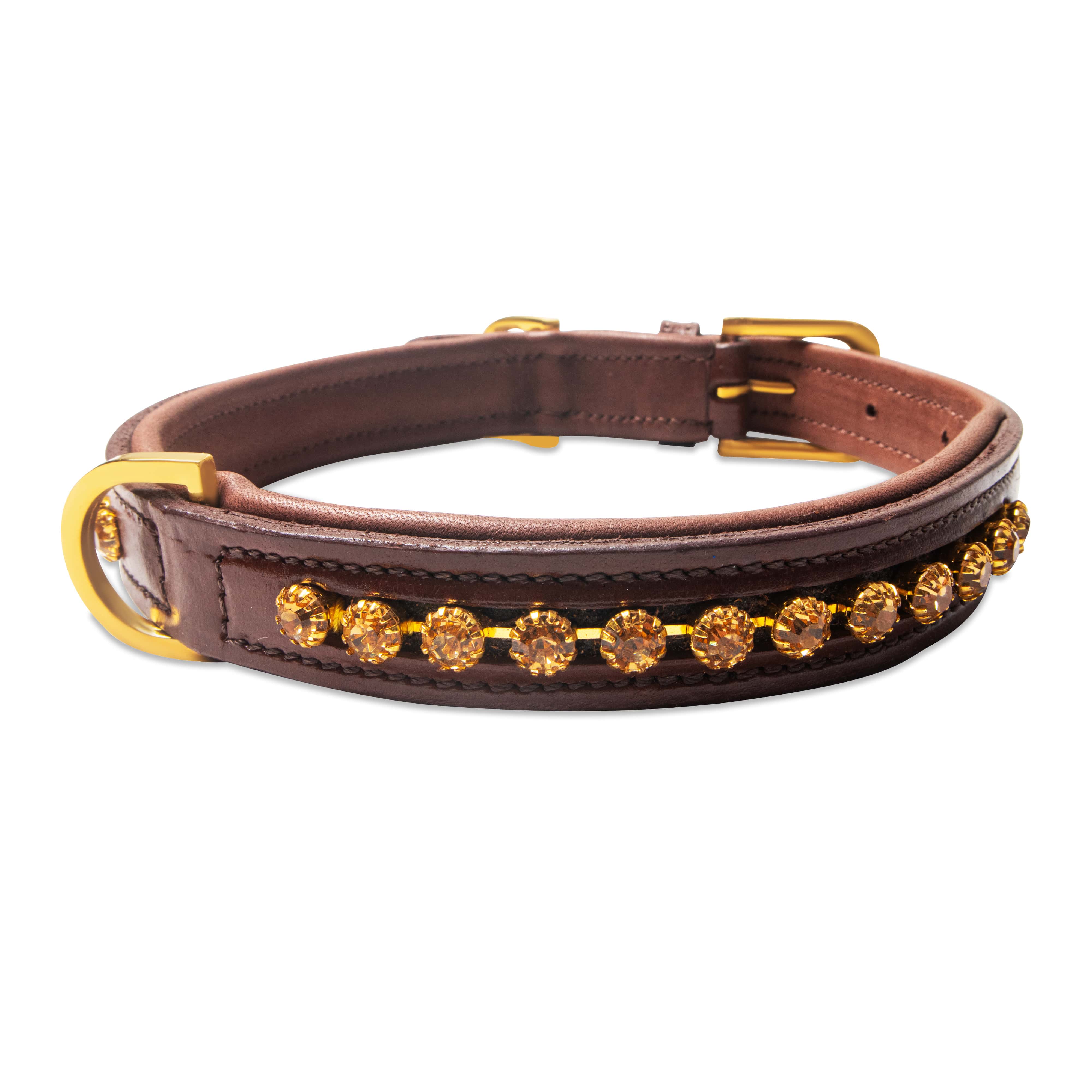
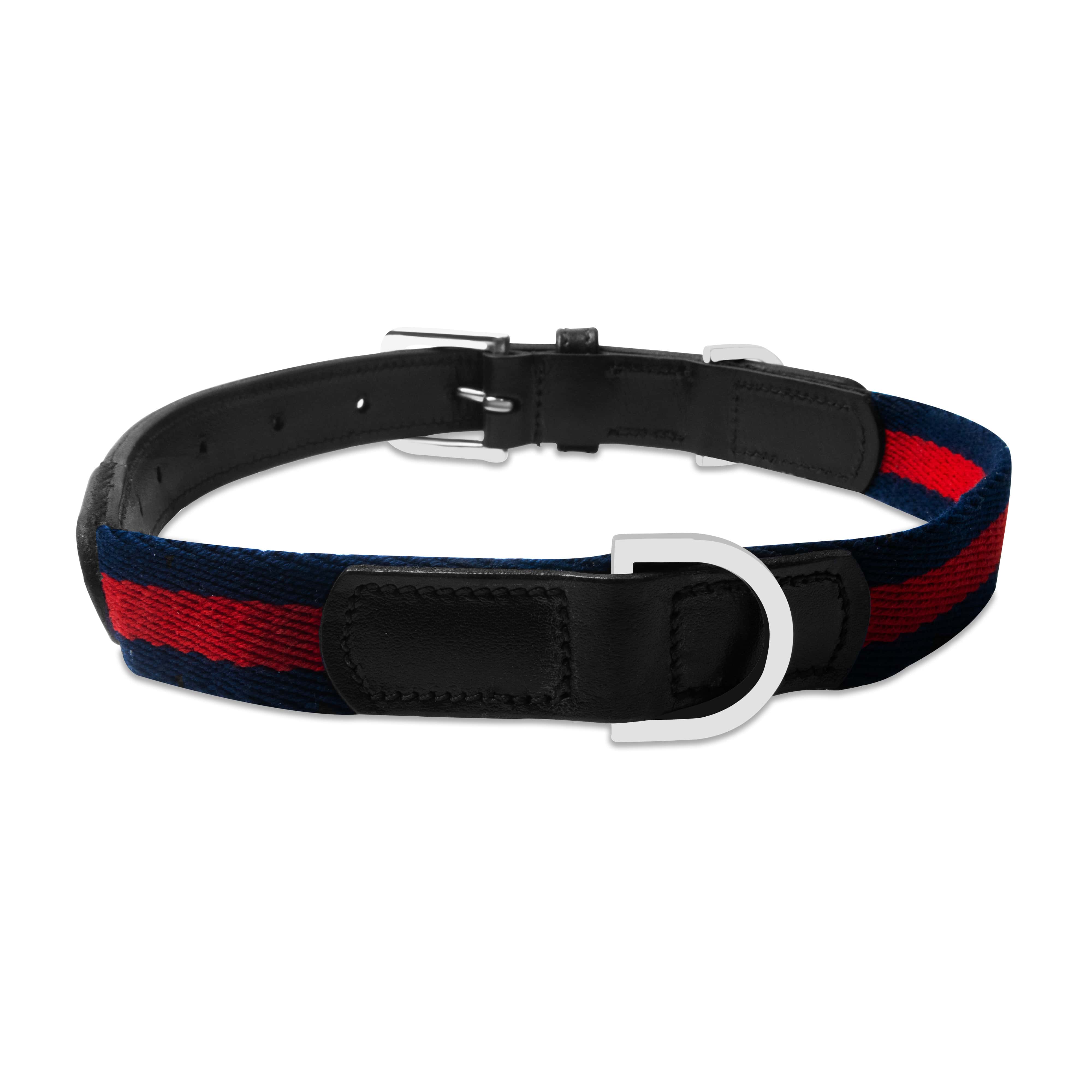
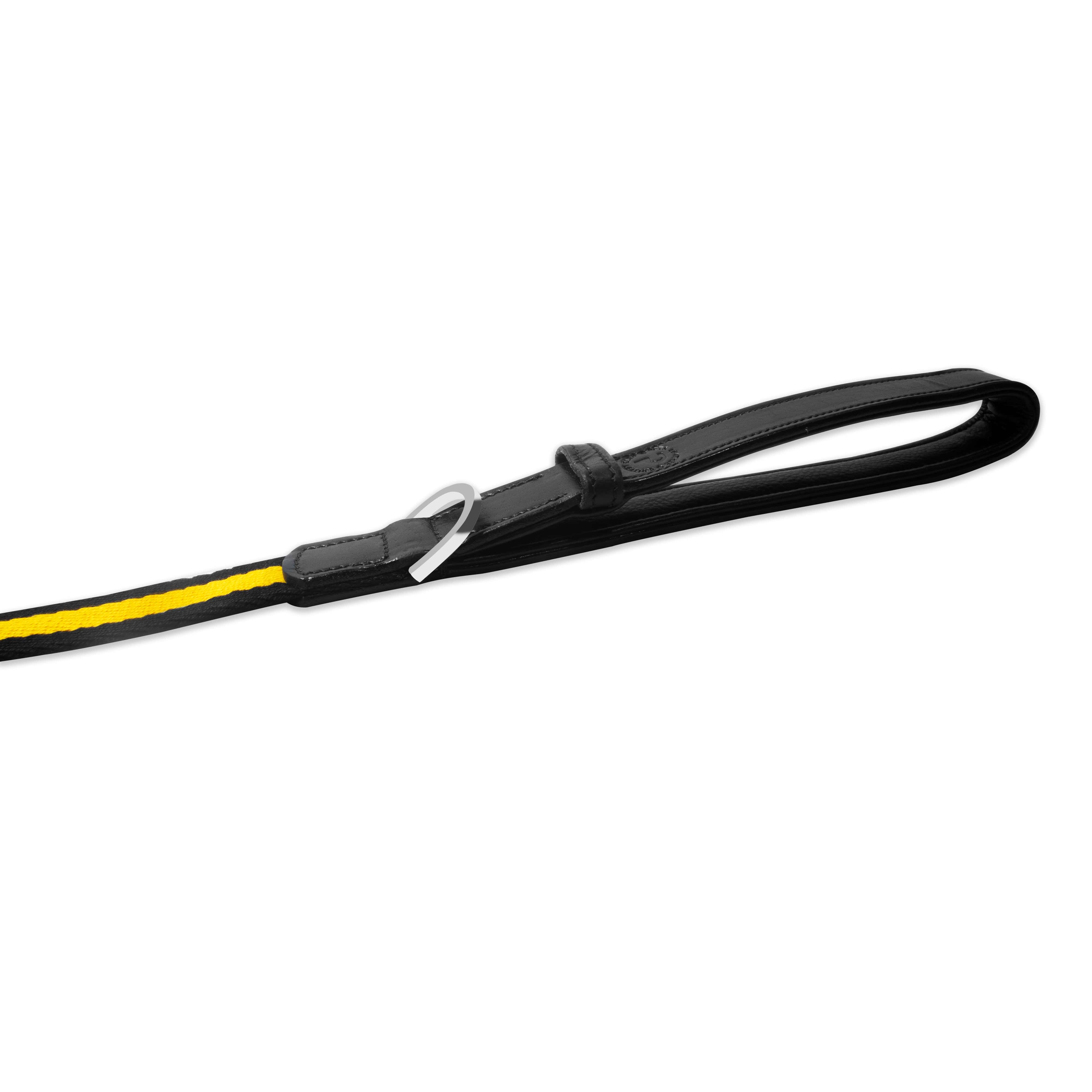


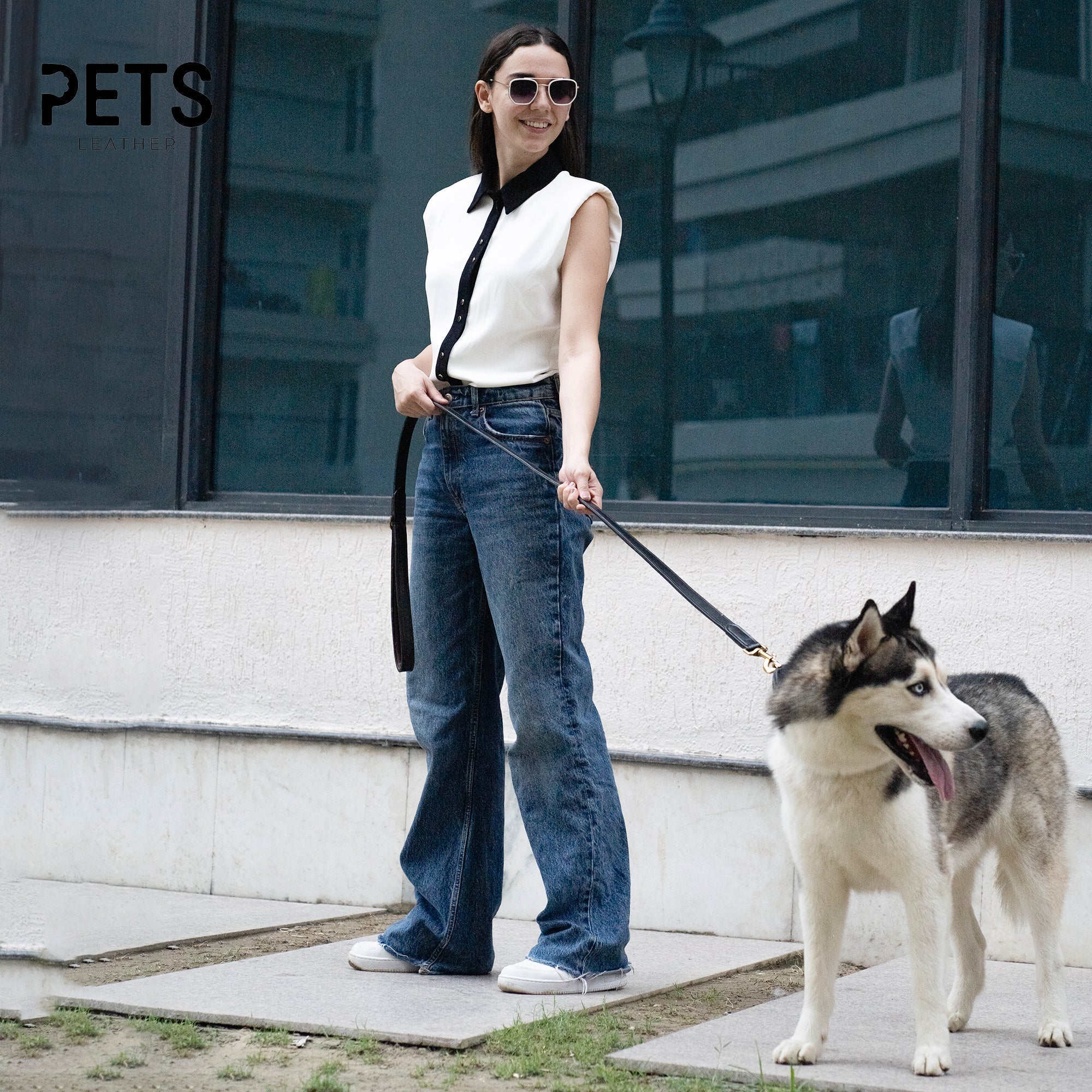
We often think of a collar as a simple place to hang an ID tag. But in reality, that strip of material is the only connection between you and your dog on a busy street. It is a safety device first, a fashion statement second.
Yet, the market is saturated with "genuine leather" that peels after a month and zinc-alloy hardware that snaps under pressure. A broken buckle during a squirrel chase can turn a routine walk into a disaster in seconds.
Buying high-quality dog collars is not merely about aesthetics; it is a critical decision for your pet’s security. Navigating the difference between durable craftsmanship and cheap fillers requires a keen eye for detail. This guide will walk you through exactly how to spot the difference, ensuring you choose a luxury leather collar for dogs that offers both peace of mind and timeless style.

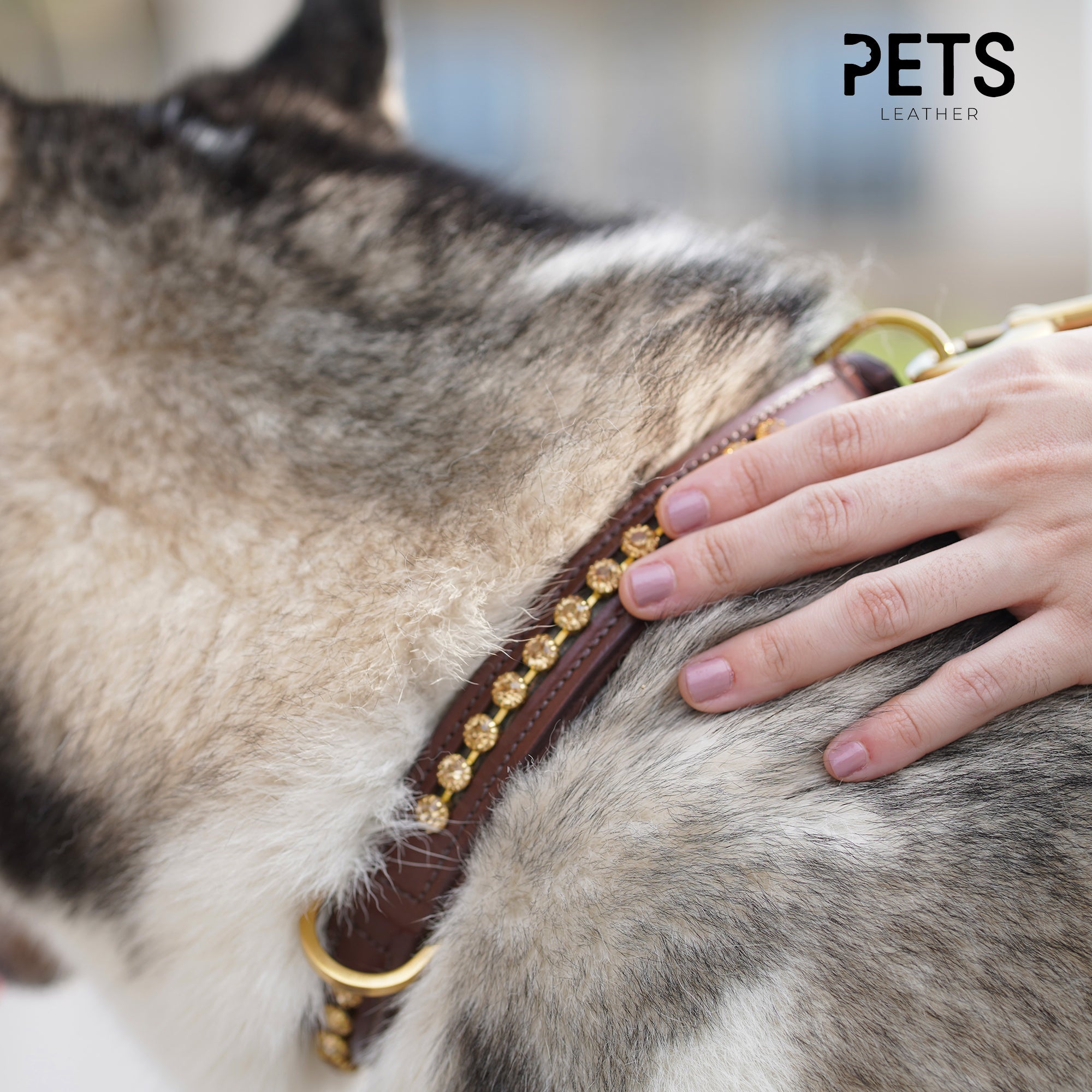
A collar that fits poorly isn't just annoying; it’s dangerous. It is that simple. If it's too loose, your dog can back out of it in traffic. Too tight? You risk injury to their trachea. The golden rule here is the "Two-Finger Test." You should be able to slide two fingers comfortably between the leather and your dog's neck. If you can’t, it’s a choke hazard. If you can fit three, it’s a slip risk. Measure twice, buy once.
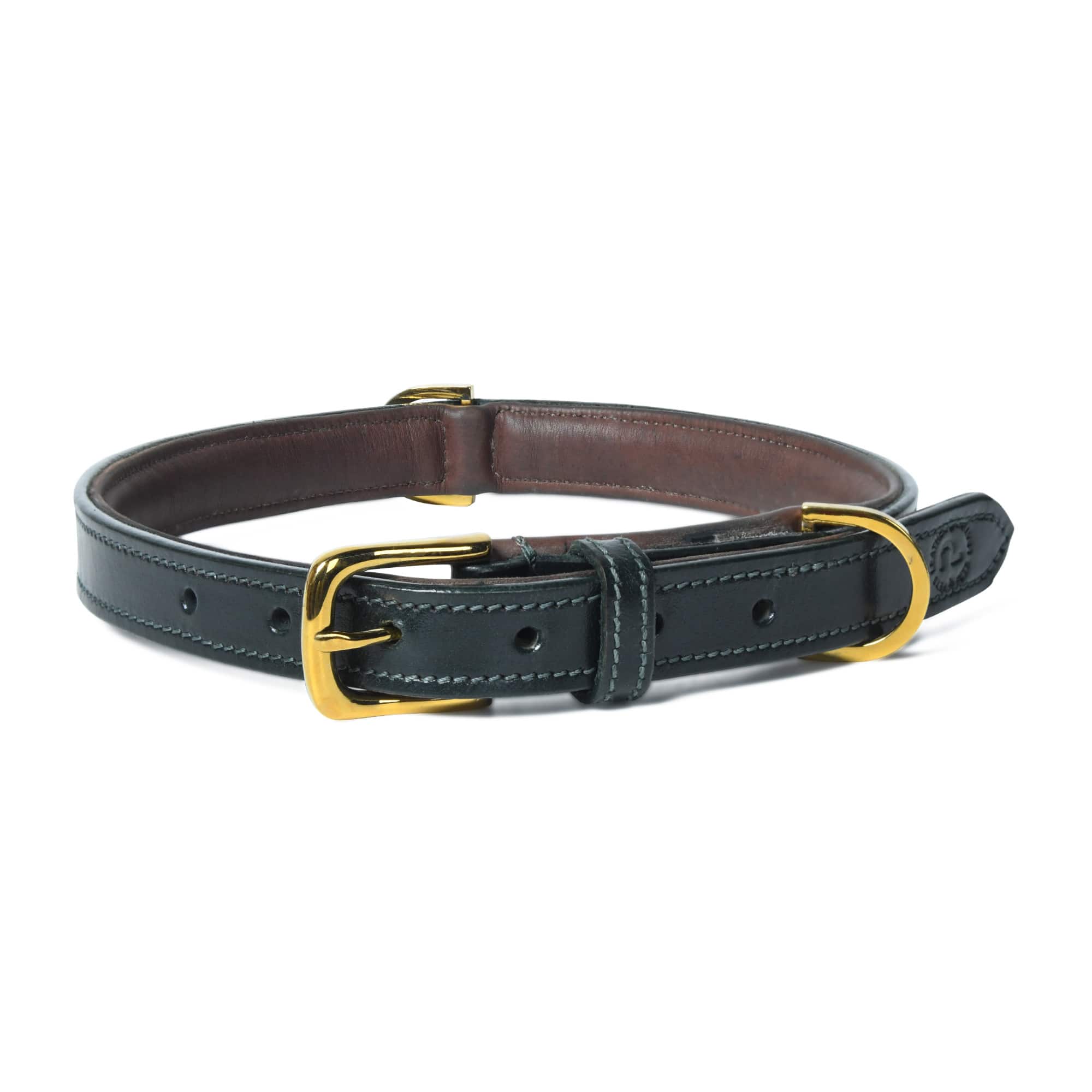
Not all that glitters is gold, and not all that looks like leather is tough. We highly recommend looking past the leather itself and checking the hardware. This is where cheap collars fail. Avoid "zinc alloy" hardware, which is brittle and can snap when a squirrel runs by. Instead, look for high-quality dog collars featuring solid brass or stainless steel buckles. They don't rust, they don't snap, and they handle the "pullers" with ease.
Comfort depends entirely on your dog's coat. For long-haired breeds like Collies or Spaniels, a standard flat collar is a nightmare; it cuts into the neck hair and causes painful matting. For these dogs, a rolled leather collar is non-negotiable as it glides through the fur. On the flip side, short-haired breeds with sensitive skin, like Boxers or Greyhounds, often suffer from chafing. For them, you need a wide collar with a soft, padded calfskin lining to cushion the throat during walks.
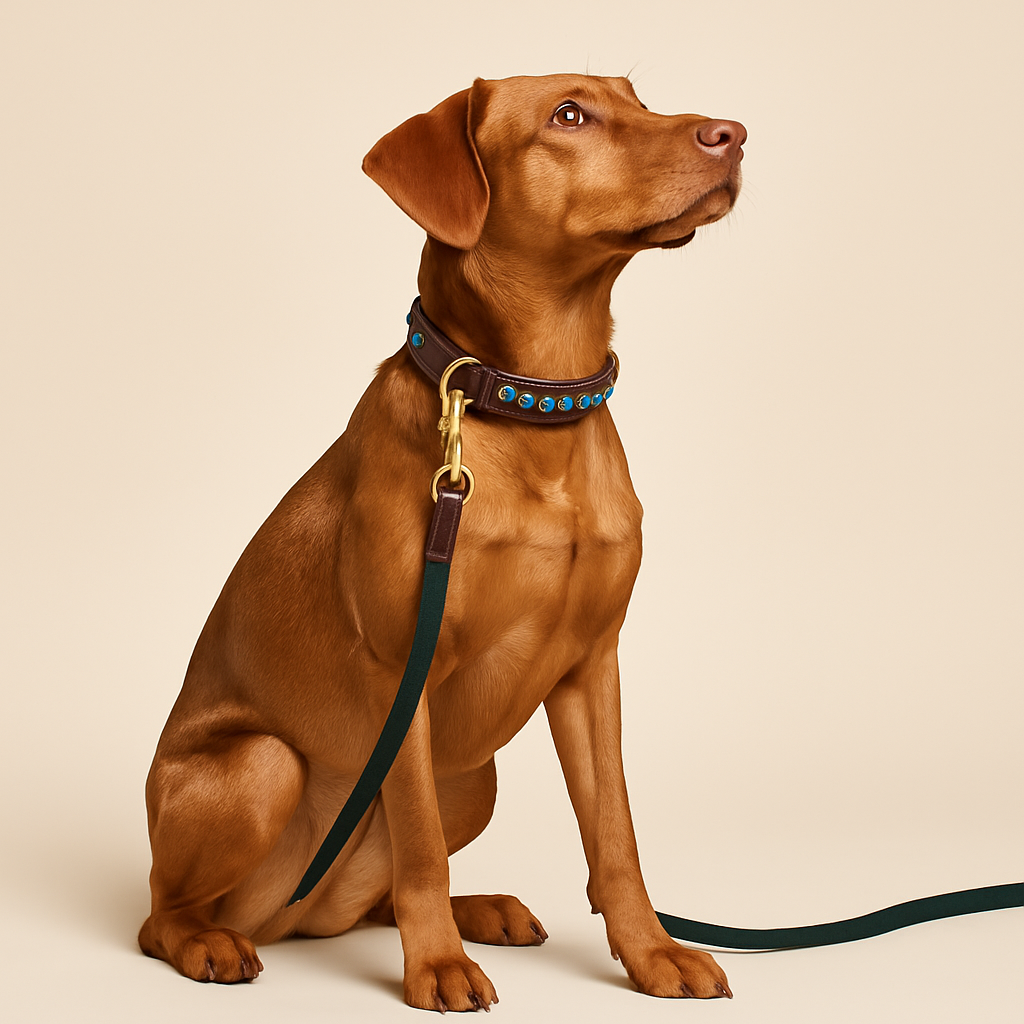
Beyond practical fit, the silhouette of the collar defines the dog’s look. A wide, flat collar acts as a statement piece, ideal for broad-chested breeds like Bull Terriers or Rottweilers, where a thin strap looks lost. Conversely, a sleek, rolled design complements the elegant, long neck of a Vizsla or Doberman without breaking the visual line. Match the "visual weight" of the leather to your dog’s bone structure.
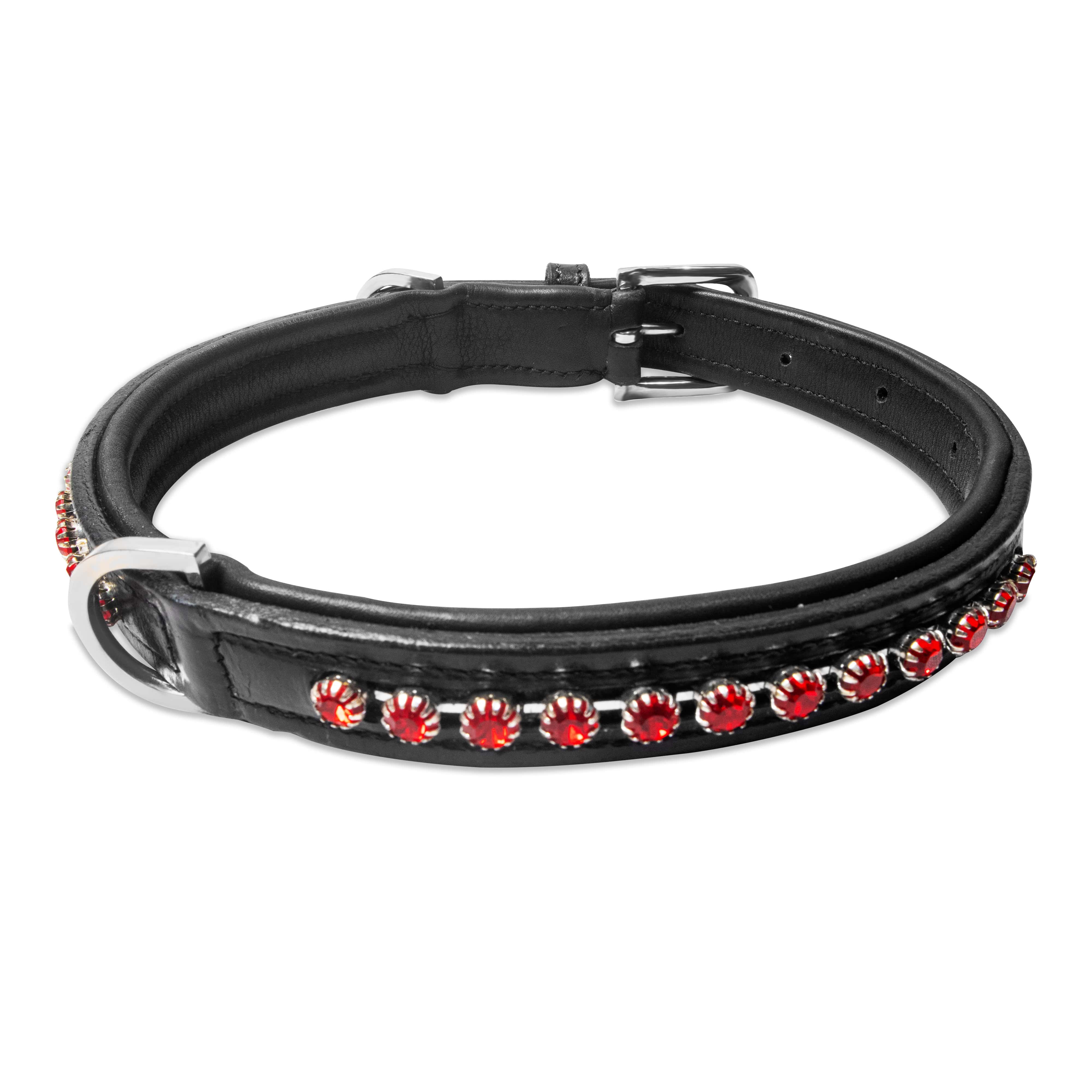
Decorations should never compromise safety. Metal studs or spikes add a distinct edge, but poor craftsmanship turns them into hazards. Always inspect the inside of the collar. If the rivets or stud backings are exposed against the lining, they will pull fur and scratch the skin. High-end manufacturers hide these attachment points between the leather layers, leaving a perfectly smooth surface against the dog’s neck.
Think of leather collars like furniture. You have your solid oak dining table that survives generations, and you have the particle board bookshelf that crumbles the moment you move it. In the world of dog gear, Full-Grain Leather is that solid oak. It is the outermost layer of the hide, dense, water-resistant, and packed with the strongest natural fibres.
For a collar that handles mud, swimming, and sudden lunges, you need the unadulterated strength found in the Petsleather dog collar collection. Like solid wood, full-grain doesn't just last; it develops a rich character over time that cheap fillers can never fake.
The collar must match the dog, not just the owner's taste. If you have a powerful breed like a Pitbull or a German Shepherd that pulls like a freight train, a thin collar is a mistake. It concentrates pressure on a small area of the trachea. For these "pullers," a wide, flat collar is essential to distribute that force safely.
Also Read: 5 Pawsome Reasons Your Dog Needs a Harness
For the heavy pullers, their use of Buffalo leather in the HideStrap line is a game-changer. It offers a tensile strength that cheap collars simply cannot match. But for the sensitive souls, the real winner is the padded interior found in their luxury lines.
They haven't just cut a strip of hide and slapped a buckle on it; they’ve lined it to prevent the exact neck chafing we warned about earlier. It is rare to find a collection that balances the "Rugged" durability with such "Runway" aesthetics.
Ultimately, a dog collar is the only link between your hand and your pet's safety. Don't compromise that connection for a few dollars. Whether you choose the rugged utility of buffalo hide or the refined elegance of padded calfskin, choosing the right luxury leather collars for dogs is an investment in their comfort, so choose wisely.
Are leather collars ok for dogs?
Absolutely. Unlike synthetic nylon, which traps heat and moisture, high-quality leather is breathable. It regulates temperature around the neck, significantly reducing the risk of yeast infections, hot spots, and foul odours.
What is the best leather for dog collars?
Full-grain vegetable-tanned leather from the Pet petsleather collection is the gold standard. It is the strongest layer of the hide, free from toxic chemicals, and durable enough to withstand pulling while remaining gentle on the skin.
Will dogs scratch leather?
They might, but that is the beauty of it. High-quality leather doesn't break when scratched; it heals. Over time, these marks blend into a rich "patina" that tells the story of your dog’s adventures.
Which leather is best for dogs?
Buffalo leather from the pets leather collection is superior for active dogs due to its porous, breathable nature and immense tensile strength. For pure luxury and softness on delicate necks, padded calfskin or cowhide is the preferred choice.
Which collar material is best for dogs?
Leather reigns supreme for longevity and hygiene. While nylon frays and absorbs smells, treated leather repels water and moulds to the dog's neck shape, offering a custom fit that synthetic materials cannot replicate.